Best Things to Do in Marrakech: Tours & Local Tips
Marrakech is like stepping into another world – seriously, this place hits different. The moment you arrive, you’re hit with a sensory overload of spices, colors, sounds, and enough energy to power a small city. It’s the kind of destination where ancient medinas meet rooftop bars, and you can haggle for carpets in the morning and watch the sunset over the Atlas Mountains by evening.
What makes Marrakech special isn’t just the Instagram-worthy spots (though trust me, there are plenty). It’s the whole vibe – the chaos of the souks, the mint tea breaks, the random snake charmers, and those hidden riads that feel like secret gardens. Whether you’re into history, food, adventure, or just soaking up that North African atmosphere, this city’s got you covered.
In this guide, I’ll walk you through the must-see attractions, the best tours worth your money, and those local tips that’ll save you from tourist traps. Let’s dive in.
Top Attractions & Things to Do in Marrakech
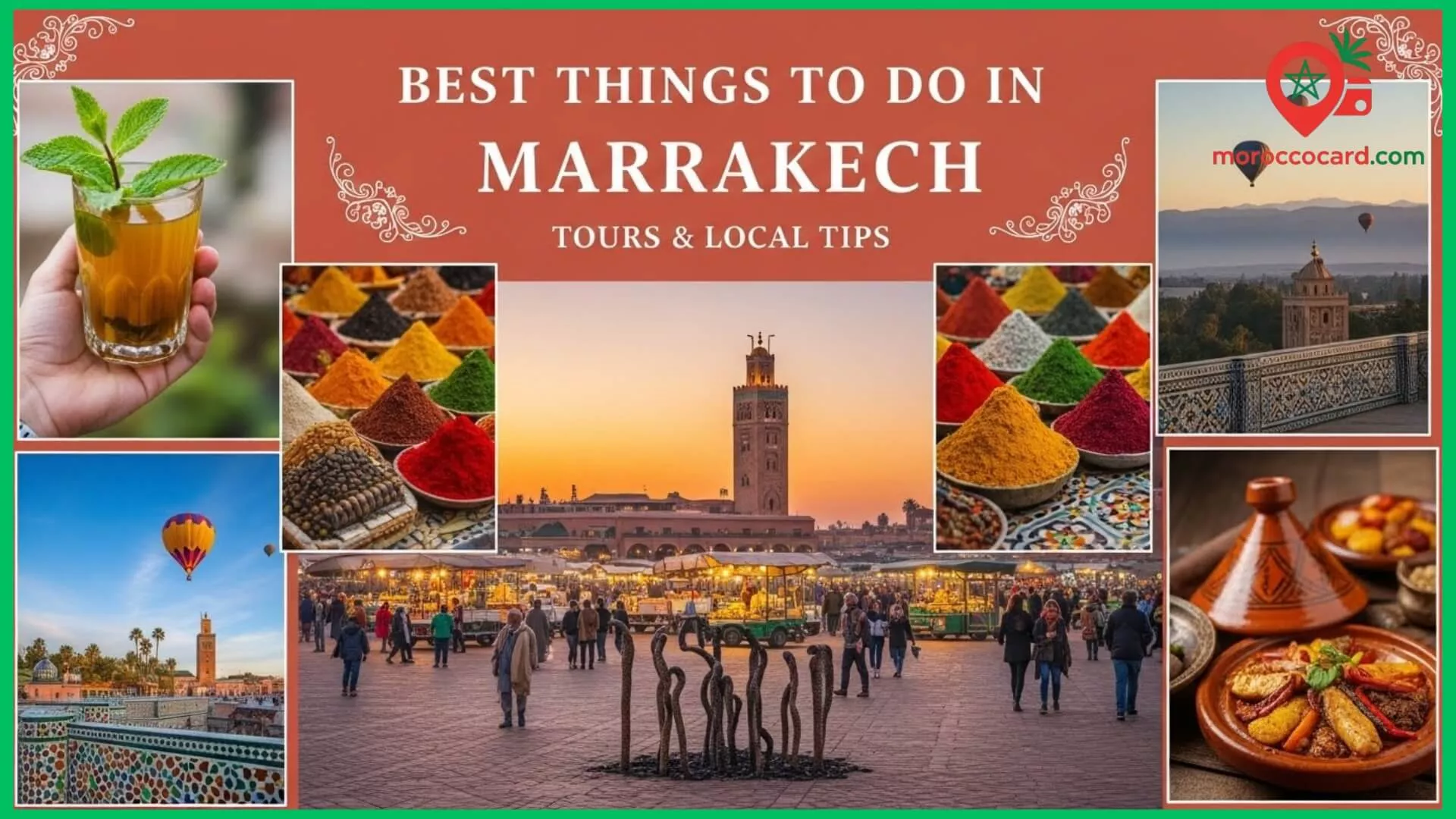
Explore Jemaa el-Fnaa Square
This is ground zero for Marrakech energy. By day, it’s a decent square with some orange juice stalls (fresh OJ for like a dollar – can’t beat that). But when the sun goes down? Game on. The whole place transforms into this massive open-air theater with storytellers, acrobats, snake charmers, henna artists, and food stalls pumping out smoke and delicious smells.
Pro tip: Hit the square in late afternoon so you can catch both vibes. During the day, it’s chill enough to explore without getting overwhelmed. At night, grab a spot on one of the rooftop cafes overlooking the square – best seats in the house with some mint tea in hand.
Just watch your pockets and politely but firmly say “no thank you” to anyone trying to put a monkey on your shoulder (they’ll charge you for photos).
Wander the Marrakech Medina & Souks
Getting lost in the Marrakech souks isn’t a mistake – it’s the whole point. These narrow alleyways are packed with everything: leather goods, lanterns, spices, carpets, argan oil, and probably some stuff you didn’t even know existed.
The souks are divided by trade (there’s a blacksmith area, a dye souk, a leather tannery), and honestly, just wandering around is half the fun. That said, the leather tannery can smell pretty intense, so mentally prepare yourself.
Bargaining 101: Whatever price they say first, start at 40-50% and meet somewhere in the middle. It’s all part of the game, and shopkeepers actually respect it. Don’t feel bad negotiating – they expect it. Also, if you’re not interested, don’t ask the price. That’s basically an invitation to a 20-minute sales pitch.
Visit the Bahia Palace
This 19th-century palace is stunning – like, jaw-dropping gorgeous. The tile work, carved ceilings, and gardens are next level. It was built for a grand vizier who clearly had good taste and a solid budget.
The rooms open onto courtyards filled with orange trees and fountains, and every corner is basically begging to be photographed. Go early morning or late afternoon when the light hits just right and before the tour groups arrive.
Photography note: Flash isn’t allowed, but natural light through the courtyards creates some magic anyway. The tile patterns are insane – take your time with them.
Discover Koutoubia Mosque
You can’t miss this one – it’s the tallest building in Marrakech with a minaret that reaches 77 meters. The mosque dates back to the 12th century and is the city’s main landmark. You’ll probably use it to navigate since you can spot it from pretty much anywhere in the medina.
Non-Muslims can’t go inside, but the gardens around it are open and offer great views. Especially nice at sunset when the whole thing glows golden.
Respect tip: Keep a respectful distance during prayer times, and dress modestly when you’re in the area. It’s an active place of worship, not just a tourist attraction.
Relax in Jardin Majorelle
This garden is a total vibe switch from the medina chaos. Created by French painter Jacques Majorelle and later owned by Yves Saint Laurent, it’s this oasis of cobalt blue buildings, exotic plants, and peaceful pathways.
The iconic blue (called Majorelle blue) pops against the greenery and makes for incredible photos. There’s also a small museum about Berber culture and YSL’s life in Morocco.
Timing hack: Get there right when it opens at 8 AM. By 10 AM, it’s packed with tour groups and the peaceful vibe disappears. Worth the early wake-up call, trust me.
Best Tours in Marrakech
Guided City Tours
For your first day or two, a walking tour through the medina is honestly clutch. A good guide will show you hidden spots you’d never find on your own and explain the history without it feeling like a lecture.
Walking tours are usually 2-3 hours and hit the main spots – Jemaa el-Fnaa, souks, Ben Youssef Madrasa (beautiful old Islamic school). You can find group tours for around €15-25 or go private for €50-80, which gives you more flexibility.
Private tours mean you can skip stuff you’re not interested in and spend more time wherever vibes with you. Plus, you can ask all the random questions without holding up a group.
Atlas Mountains Day Trip
About an hour from Marrakech, the Atlas Mountains are a completely different Morocco. Think: mountain villages, terraced farms, and views that make you forget you were just in a dusty city.
Most tours take you through Berber villages where you can see traditional life and have mint tea with locals (it’s always mint tea – Moroccans are serious about their tea game). Some include short hikes to waterfalls or viewpoints.
Real talk: The winding mountain roads can be rough if you get carsick, so maybe grab some motion sickness meds. The views are worth any queasiness though.
Sahara Desert Tours from Marrakech
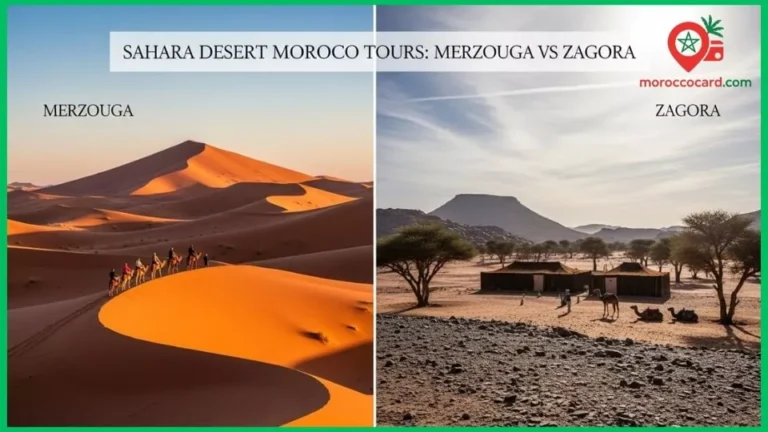
This is bucket list stuff right here. Multi-day tours take you from Marrakech through the Atlas Mountains, past kasbahs and valleys, all the way to the Sahara dunes near Merzouga or Zagora.
The classic experience includes camel trekking into the dunes at sunset, sleeping in a desert camp under more stars than you’ve ever seen, and waking up for sunrise over the sand. It’s magical in that way that sounds cliché but actually lives up to the hype.
Tour length: 2-day tours hit the closest dunes (Zagora) but feel rushed. 3-day tours to Merzouga give you more time and bigger dunes. 4-5 day tours add stops like Todra Gorge and Dades Valley – worth it if you have the time.
Real expectations: The camel ride is fun, but your legs will feel it the next day. The camps range from basic (sleeping bags under the stars) to luxury (actual beds and proper bathrooms). Choose based on your comfort level and budget.
Food & Cooking Tours
If you’re into food (and honestly, who isn’t?), Marrakech has some great culinary tours. Most start with a guide taking you through local markets, explaining ingredients and helping you pick spices you’d never know how to use.
Then you head to someone’s home or a cooking school to make tagine, couscous, or Moroccan salads from scratch. You learn the techniques, eat what you made, and leave with recipes you’ll probably attempt once back home before ordering takeout instead.
Bonus: You’ll learn which spices to buy and how to spot quality argan oil (spoiler: the super cheap stuff in plastic bottles isn’t the real deal).
Hammam & Spa Experiences
A traditional hammam is part bath, part exfoliation session, part cultural experience. You basically get steamed, scrubbed with a rough glove until your skin comes off in rolls (oddly satisfying), covered in black soap, and then rinsed clean.
Traditional hammams are local spots where you’ll pay like 50-100 dirhams (€5-10), but it’s no-frills and you’re on your own figuring out the process. Tourist hammams cost more (€30-80) but include guides and are way less intimidating for first-timers.
Luxury spas like those in fancy hotels offer hammam-inspired treatments with all the amenities – think argan oil massages, rose petal baths, and robes you’ll want to steal. Pricey but incredible if you’re treating yourself.
Unique & Off-the-Beaten-Path Experiences
Visit Local Riads
Riads are traditional Moroccan houses built around interior courtyards, and staying in one is a whole vibe. From the outside, they look like nothing special (literally just a door in a wall). But inside? Tiled fountains, carved wood, rooftop terraces, and that peaceful courtyard energy.
Many riads have been converted into guesthouses or boutique hotels. Some are budget-friendly, others are straight luxury. Either way, it’s way more atmospheric than a regular hotel.
Choosing one: Location matters. Deep in the medina means an authentic atmosphere, but navigating narrow streets with luggage isn’t fun. The edge of the medina or near the main squares gives you easier access while keeping the traditional feel.
Explore Mellah (Jewish Quarter)
The Mellah gets way less tourist traffic than the main medina, which makes it perfect for slower exploration. This former Jewish quarter has a different architectural style with characteristic balconies and a more spacious layout.
There’s still a functioning synagogue (Slat Al Azama) you can visit, plus the old Jewish cemetery and spice market. The history here is fascinating – Marrakech had a significant Jewish population for centuries.
Local tip: Combine this with a visit to the nearby Bahia Palace since they’re close. The streets are quieter, which is nice when you need a break from medina intensity.
Art & Culture in Gueliz
Gueliz is modern Marrakech – wide streets, contemporary cafes, art galleries, and zero haggling. It’s where locals actually shop and hang out.
Check out Avenue Mohammed V for bookshops and galleries. The MACMA (Museum of Contemporary African Art) is small but interesting. Plus, there are proper coffee shops with wifi if you need to catch up on emails or just chill without someone trying to sell you carpets.
Vibe check: It’s not as “exotic” as the medina but it’s real Marrakech life. Good for understanding the city beyond the tourist bubble.
Local Tips for Visiting Marrakech
Best Time to Visit Marrakech
Spring (March-May) and fall (September-November) are sweet spots. Weather’s pleasant (20-28°C), perfect for exploring without melting. Crowds are moderate.
Summer (June-August) gets brutally hot – we’re talking 35-45°C. If you go then, plan indoor activities during midday heat and save outdoor stuff for early morning or evening. Hotels are cheaper, though.
Winter (December-February) is actually nice – sunny days around 18-20°C, though it drops at night. You’ll need a jacket for evenings. Bonus: way fewer tourists and the Atlas Mountains have snow, which looks amazing.
Festival highlight: Marrakech International Film Festival (usually November/December) brings major cinema energy if you’re into that.
Cultural Etiquette & Dress Code
Morocco’s pretty relaxed compared to some Muslim countries, but respect still matters. In the medina and religious sites, cover shoulders and knees – both men and women.
Women don’t need headscarves except inside mosques (which you can’t enter anyway as a non-Muslim). That said, dressing more conservatively = less hassle. A loose shirt and pants or long skirt works perfectly.
Photography rules: Always ask before photographing people. Some will want money (small coins fine), others will just say no. Never photograph police or government buildings.
Ramadan note: If you visit during Ramadan, don’t eat or drink in public during daylight hours out of respect. Some restaurants stay open for tourists but keep it discreet.
Getting Around Marrakech
The medina is mostly pedestrian, so you’ll walk. A lot. Comfortable shoes are non-negotiable.
Petit taxis (small red cars) are cheap and run on meters – insist they use it. Should be around 10-30 dirhams for most trips. They fit 3 passengers max.
Caleches (horse-drawn carriages) are touristy but fun for a quick ride, especially if your feet are dead. Agree on price before getting in.
Scooters/bikes can be rented but honestly, traffic is chaotic and probably not worth the stress unless you’re experienced.
Common scams to avoid: Fake guides offering to show you around (politely decline), people leading you somewhere then demanding money, and taxi drivers who “forget” to use the meter. Stay friendly but firm.
Money, Tipping & Bargaining
Currency is Moroccan dirham (MAD). ATMs are everywhere in Gueliz and around the medina. Exchange rates at official bureaus are better than those at hotels.
Tipping: Not mandatory but appreciated. 10% in restaurants if service isn’t included, 10-20 dirhams for guides, small coins (5-10 dirhams) for helpful service.
Bargaining: Already covered this in the souks section, but remember – it’s expected for goods, not in proper shops or restaurants with fixed prices. Start low, stay friendly, and be willing to walk away.
Where to Eat in Marrakech
Street food in Marrakech is an adventure. The Jemaa el-Fnaa food stalls at night are the famous spot – you’ll see numbered stalls with grills, soups, and snails (yes, snails are big here).
Must-try dishes: Tagine (slow-cooked meat and veg in that conical pot), couscous (Friday is traditional couscous day), pastilla (sweet and savory pie with pigeon or chicken), harira soup (hearty and perfect for lunch), and anything with preserved lemons.
Street food tips: The busiest stalls are usually good signs. Avoid anything sitting out in the heat too long. Your stomach might need a day to adjust, so maybe start slow.
Sit-down restaurants: Le Jardin (gorgeous courtyard setting), Nomad (modern Moroccan in the medina), Café Clock (camel burger is surprisingly good).
Rooftop dining: Café Arabe, Terrasse des Épices, or any of the rooftop spots overlooking Jemaa el-Fnaa for sunset views with dinner.
Budget hack: Lunch menus are way cheaper than dinner, and local places outside the main tourist zone charge half what Medina restaurants do.
Where to Stay in Marrakech
Riads in the Medina: Most atmospheric option. Morning calls to prayer become your alarm clock, which is either charming or annoying depending on your perspective. Range from budget (€30-50/night) to luxury (€200+).
- Budget: Riad Laaroussa, Riad Dar Sara
- Mid-range: Riad Kheirredine, Riad Zolah
- Luxury: La Mamounia, Royal Mansour (if you’ve got serious cash)
Gueliz Hotels: Modern, easier to navigate, better for longer stays or if medina chaos isn’t your thing. Access to restaurants, shops, easier taxi pickups.
Luxury resorts: Outside the city (Palmeraie area) you’ll find big resorts with pools and spas. Great for families or if you want a relaxing base with day trips into the city.
Hostels: Budget travelers can find decent hostels in Gueliz or edge of medina for €10-20/night. Social atmosphere if you’re traveling solo.
Sample Marrakech Itineraries
2-Day Itinerary
Day 1: Morning at Bahia Palace and Mellah, lunch in the medina, afternoon in the souks and Ben Youssef Madrasa, sunset at Jemaa el-Fnaa from a rooftop cafe, dinner at the square’s food stalls.
Day 2: Early morning at Jardin Majorelle, late morning at Koutoubia Mosque gardens, lunch in Gueliz, afternoon hammam experience, evening walking tour of the medina.
3-Day Itinerary
Days 1-2: Follow the 2-day plan above.
Day 3: Full-day Atlas Mountains tour with Berber village visit, return to Marrakech for dinner at a nicer restaurant, evening drinks on a rooftop bar.
5-Day Itinerary
Days 1-3: Follow the 3-day plan.
Days 4-5: 2-day Sahara desert tour (or 2-day Essaouira coastal trip if you prefer beaches). Return to Marrakech on day 5 for final evening and departure.
Alternative day 4-5: Stay in Marrakech and add cooking class, day trip to Ouzoud Waterfalls, more hammam relaxation, exploring Gueliz galleries and cafes, or just slower-paced medina wandering with mint tea breaks.
Marrakech is one of those places that either completely overwhelms you or totally captures your heart – sometimes both at once. Between the historic medina, incredible food, mountain and desert access, and that distinct North African energy, it packs more experiences into a few days than most cities manage in a week.
The key is balancing the iconic stuff (Jemaa el-Fnaa, souks, palaces) with those slower moments (mint tea on a rooftop, getting lost in quiet medina corners, actual conversations with locals). Don’t try to see everything – you’ll just exhaust yourself. Pick what interests you most and leave room for spontaneous discoveries.
Book that desert tour if it calls to you, spend the money on a good riad, try the street food even if it scares you a little, and remember that getting lost in the medina is part of the experience, not a problem to solve.
Ready to experience the Red City? Your Moroccan adventure starts here.
FAQ
Is Marrakech safe for tourists?
Generally yes, especially in tourist areas. Petty theft and scams are the main concerns, not violent crime. Use common sense – watch your belongings, be aware of your surroundings, and trust your instincts.
How many days do I need in Marrakech?
3-4 days lets you see the main sights without rushing. Add 2-3 days for desert or mountain trips. A week gives you time to really explore and take day trips.
Do I need to speak Arabic or French?
Helpful but not essential. Many people in tourism speak English. Learning basic Arabic or French phrases (hello, thank you, how much) goes a long way and locals appreciate the effort.
What should I wear in Marrakech?
Modest and comfortable. Cover shoulders and knees, especially in the medina. Lightweight, breathable fabrics. Comfortable walking shoes are essential. Women don’t need headscarves unless entering mosques (which you generally can’t as a tourist).
Is tap water safe to drink?
Locals drink it, but tourists should stick to bottled water to avoid stomach issues. Brushing teeth with tap water is usually fine.